Office vs. Errand Days [en]

[fr] Ma solution pour rester un peu en contrôle de mon agenda: bloquer des journées entières de travail au bureau sans rendez-vous, et concentrer tout ce qui implique sorties, courses, cours, meetings, rencontres sur d'autres journées. Etre ferme, avec soi-même tout d'abord.

These last weeks have been pretty hectic. Large amounts of stress (work and personal), slipping deadlines, contemplation of possible big changes ahead… I had the feeling that I was spending each of my days running around and not having the time to do any of all the hyper-urgent things I needed to deal with.

Now things are much calmer. I caught up with my deadlines (boy, were they running away fast!) and am much more relaxed. So, of course, it’s easy to figure out solutions that make things better and talk about them when things are better but… who knows, maybe these solutions did actually help me 😉

Actually, “this solution”: concentrate meetings and errands on given days. Book whole days in the office. Be firm with yourself. I actually put huge “booked!” meetings in my calendar. And I don’t make exceptions. Because when you start making exceptions, even with very good reasons, it’s the beginning of the end — and before long your whole week is just riddled with appointments and meetings, like a piece of old Emmental cheese.

A Week After Ada Lovelace Day (ALD09) [en]

[fr] La Journée Ada Lovelace a été un grand succès, avec une participation dépassant les espérances. Je voudrais remercier tout particulièrement ceux et celles qui m'ont choisie comme sujet de leur article pour cette journée: Jean-Christophe, Michel, Graham, Stéphanie, Baud, et Delphine. On se retrouve l'année prochaine!

Oh heck, it’s been a week without a blog post on CTTS again. Maybe one day somebody will write a WordPress plugin to send reminders to over-busy bloggers like me. I had decided to write a post this morning before starting my work for the day, so here we are: a summary-roundup with a few post-event thoughts for Ada Lovelace Day.

First, it was a huge success. Nearly 2000 people signed the pledge. (Not that many have marked it as completed, but to be honest, I almost forgot myself, and a friend of mine had quite a lot of trouble figuring out how to mark her pledge as completed…) 1400 people signed up for the event on Facebook. On the day itself, #ald09 was trending nicely on Twitter (see Twitter search page screenshot). About 1000 people added their blog post to the Ada Lovelace Collection (the database needs cleaning up though, so if you are comfy with databases and have a little time to space, do let us know). Not everybody signed up everywhere, so the real numbers are somewhere in the middle.

I spent the day on Twitter, mainly (and writing my blog post about Marie Curie, in French). I was really impressed with the number of people taking part in ALD09, tweeting and blogging about it — clearly, the event had critical mass in the blogosphere. Many of the women blogged about were unknown to me, proof of how useful it is to sing our unsung heroines of tech and blog about these women who can then become role-models for more of us. I had a great time hopping from blog to blog reading about the Ada Lovelaces of today.

If you’d like to read some posts, the Ada Lovelace Day Collection is of course a great place to start. People have posted links to their posts on Twitter, on the Facebook event wall, in the pledge comments, and you can also go digging in Technorati or Google blogsearch. And if you have to check out only one of the creations for this day, go and look at Sydney Padua‘s web comic about Ada Lovelace, part 1 and part 2. I guarantee you’ll like it!

I’d like to thank Suw for having the brilliant idea behind Ada Lovelace Day, and organizing it. I’d also like to thank those of you who picked me as their “woman to blog about” on Ada Lovelace Day — I’m very honoured, humbled, happy, proud, and a little embarrassed. So, a particular thanks to Jean-Christophe, Michel, Graham, Stéphanie, Baud, Delphine, who chose me for Ada Lovelace Day, alone or alongside others. Thanks also to Henriette, Lyonel, and Luis who have included me in their posts and lists for ALD09.

See you next year!

Ella Maillart: Ti-puss, ou l'Inde avec ma chatte [fr]

[en] As the editor for ebookers.ch's travel blog, I contribute there regularly. I have cross-posted some of my more personal articles here for safe-keeping.

Cet article a été initialement publié sur le blog de voyage ebookers.ch (voir l’original).

ella_maillartAujourd’hui, dans le monde de la technologie, c’est la Journée Ada Lovelace: plus d’un millier de blogueurs se sont donné le mot pour publier un article consacré à une femme qu’ils admirent pour ses réussites scientifiques ou technologiques.

Alors, bien sûr, ici on vous parle de voyages, pas de technologie. Mais je vais profiter de l’occasion pour vous parler d’une femme voyageuse que j’admire, et dont la vie me laisse un peu envieuse: Ella Maillart.

Durant une vie qui a vu presque tout le vingtième siècle (1903-1997), Ella Maillart a été sportive de haut niveau (voile, ski, hockey), aventurière et voyageuse, écrivain, journaliste, photographe… La lecture de sa biographie et des ses ouvrages laisse deviner une personnalité farouchement indépendante.

ti-pussMon première et plus mémorable rencontre avec Ella Maillart a été la lecture de son livre Ti-puss, ou l’Inde avec ma chatte. J’ai moi-même habité en Inde durant un an (moins longtemps qu’Ella, clairement!) et je suis rentrée en Suisse avec un chat dans mes bagages. Comme Ella? Je vous laisse lire le livre pour avoir la réponse.

Je crois que l’Inde est un pays dont on a la nostalgie, une fois qu’on y a passé quelque temps. Que ce soit un film ou un livre, il est vite fait d’avoir une grande envie d’y retourner.

Ella Maillart, en plus, vous donne cette envie d’aventure et d’indépendance qu’il manque parfois à des casaniers (eh oui) comme moi pour faire le pas d’acheter un billet d’avion… et de se lancer.

(crédit photo: Wikimedia Commons)

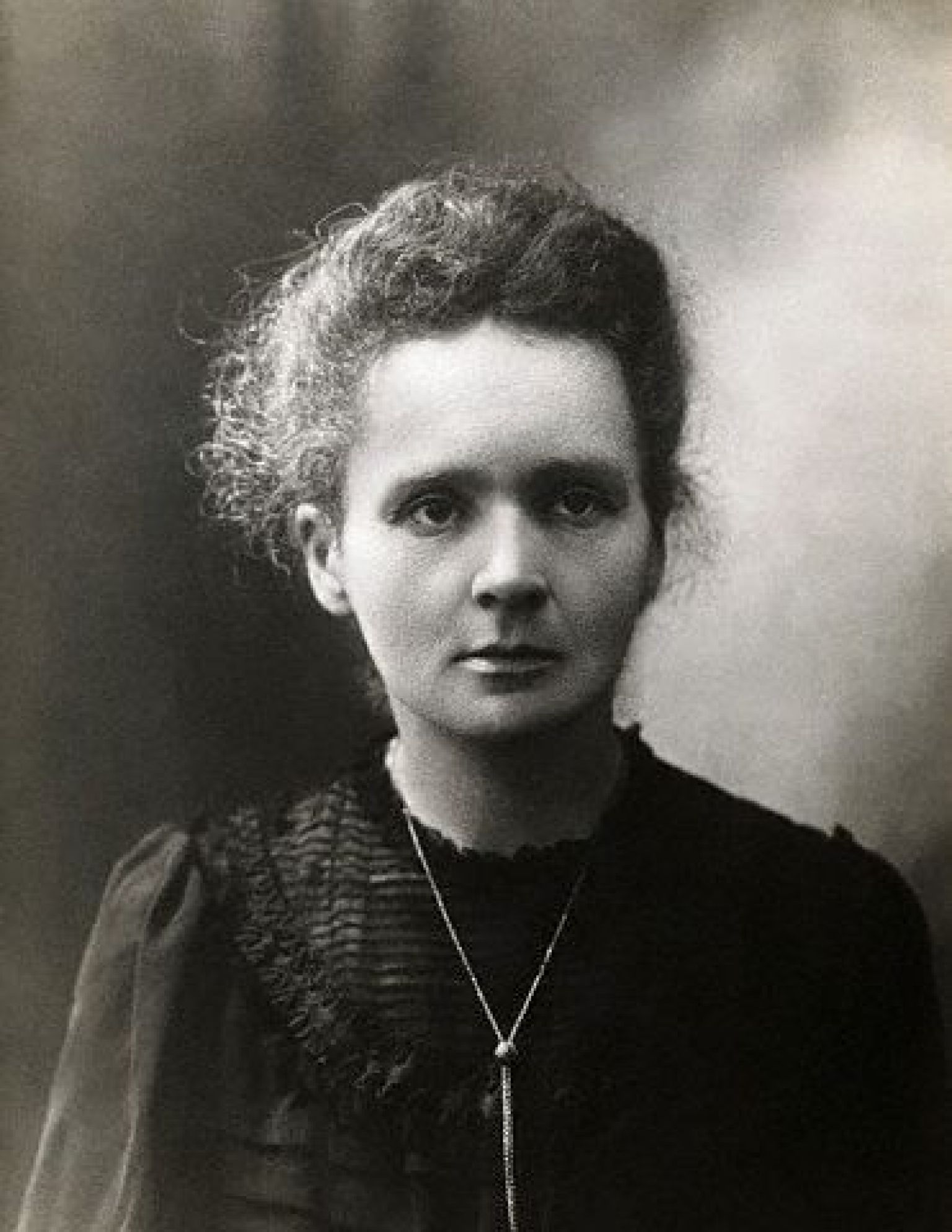
Journée Ada Lovelace: Marie Curie [fr]

L’hiver de mes quinze ans, je me suis plongée dans des ouvrages scientifiques écrits par Isaac Asimov. De fil en aiguille, j’ai emprunté à la bibliothèque d’autres ouvrages, et fait mon éducation dans les domaines de la physique des particules, l’astrophysique, et la chimie.

J’avais jusque-là une vague ambition d’être prof de maths. Mais après ce contact avec le monde de l’infiniment petit et de l’infiniment grand, c’était décidé: je serais physicienne, chercheuse, scientifique — comme Marie Curie.

Du coup, je suis partie en section X au gymnase (ça n’existe plus, mais à l’époque, c’était une spécialité vaudoise qui combinait les programmes des sections latine et scientifique) et en chimie à l’université.

Aujourd’hui, c’est la Journée Ada Lovelace: et la femme admirable dont je veux vous parler, c’est Marie Curie. J’ai longuement hésité entre vous parler d’une figure historique ou d’une des nombreuses femmes contemporaines et plus proches de moi, et je me suis finalement décidée pour Marie Curie.

Je crois que le role qu’elle a joué en tant que modèle dans mes aspirations d’adolescente est une démonstration parfaite de l’importance d’avoir à portée de main des modèles féminins, et par conséquente de la pertinence d’une journée comme Ada Lovelace Day.

Si j’ai entrepris des études scientifiques, c’était donc parce que je me voyais chercheuse. L’image que j’avais dans la tête, c’était Pierre et Marie Curie dans leur labo — et cette femme, prix Nobel du tout début du XXe siècle… j’avoue qu’elle m’impressionnait.

En général, on mentionne “Pierre et Marie Curie”. Le couple un peu romantique de scientifiques découvrant la radioactivité, la main de Marie photographiée aux rayons X par son mari Pierre… Dans de tels cas de figure, on a vite tendance à mettre la femme un peu dans l’ombre de l’homme. Remettons l’eglise au milieu du village, si vous voulez bien.

Tout d’abord, c’est Marie qui entame ses recherches sur le rayonnement de l’uranium pour son doctorat. Un an plus tard, Pierre abandonne ses propres recherches (sur la piézoélectricité) pour la rejoindre dans ses travaux sur la radioactivité (c’est d’ailleurs elle qui a inventé ce terme). Ils obtiennent en 1904 avec Henri Becquerel le prix Nobel de physique. Elle est la première femme à recevoir un prix Nobel, et également la première femme lauréate de la Médaille Davy.

Pierre Curie meurt accidentellement en 1906. Marie vivra jusqu’en 1934 — en fait, la plus grande partie de sa carrière scientifique se fera sans son mari à ses côtés.

Elle reprend le poste de professeur à la Sorbonne de son mari décédé, devenant la première femme à enseigner dans la prestigieuse université (professeur titulaire en 1909). En 1911, deuxième prix Nobel, de chimie cette fois-ci. Elle est la première personne à recevoir deux prix Nobel pour ses travaux scientifiques, et la seule femme à ce jour.

Elle dirigera ensuite le laboratoire de physique et chimie de l’Institut du Radium (futur Institut Curie), passe son permis de conduire en 1916, et participe à la création d’unités de radiographie mobiles (les Petites Curies) pour pouvoir directement prendre des radios des soldats blessés au front, sur place. En 1925, elle crée avec sa soeur l’Institut Radium à Varsovie.

Si la vie et l’oeuvre scientifique de cette femme extraordinaire vous inspirent (j’ai mis des heures et des heures à écrire ce billet, finalement, parce que je me suis plongée dans des lectures de biographies que je n’avais pas prévues!), les articles Wikipedia en français et en anglais sont de bons points de départ (n’hésitez pas à utiliser les liens cités en source à la fin de chaque article… il y a de la lecture!)

Et vous? Qui sont les femmes scientifiques que vous admirez? Choisissez-en une, qu’elle soit célèbre ou non, et parlez-nous d’elle pour la Journée Ada Lovelace. Je me réjouis de vous lire!

Today is Ada Lovelace Day [en]

Today, March 24th, is Ada Lovelace Day — an occasion to celebrate outstanding women in technology.

I’ll be publishing my post later in the day — I look forward to reading yours!

Why the Fifteen-Minute Timer Dash Works [en]

[fr] Utiliser une minuterie pour avancer dans des tâches difficiles fonctionne car cela nous recentre sur le processus, alors que nous sommes en général paralysés par le résultat. Il ne s'agit pas de finir, d'avoir fait, mais de faire.

FlyLady coaches you to unclutter and clean your flat, 15 minutes at a time. It works, because 15 minutes is a short enough amount of time that anybody can afford to take 15 minutes off to do something important, but it’s also long enough that you can actually get stuff done during that time.

There is another reason, though. Many people stuck in the procrastination gut (myself included, pleading guilty) suffer from what I’d like to call goal paralysis. What’s important is the result. Have it done, finished, over with. Produce something visible. We all know we’re in an excessively result-driven culture. And we’re losing the process… in the process.

We lose sight of the pleasure we can have to just do things. Or, even if we don’t derive pleasure from doing them… we forget about doing them, and focus only on having done them. But the first step out of procrastination is doing, not having done.

The timer puts you back in the process. It’s not about finishing in 15 minutes, it’s actually not about finishing at all, it’s about doing some of it.

The timer also works because it has an end. It chimes. When you’re done, you’re done. Many people who have trouble getting started also have trouble stopping once they do get started. It’s the two faces of the same coin: if you know you’ll get sucked up in whatever you start doing, lose yourself in it, isn’t it smart to not start? It is. With the timer, you have a protection about that too.

The only problem is now to become “unstuck” enough to reach for that timer…

Blogging Like Cleaning the Flat [en]

[fr] Bloguer, c'est comme ranger l'appart avant de commencer à préparer ses examens ou se lancer dans un gros projet. C'est une chose "non-prioritaire" que je fais pour moi, qui me remet en mode "faire", et qui me déstresse (une chose de moins à faire qui me culpabiliserait).

Many years ago, I understood that a first step to getting “back on track” when I was feeling overwhelmed by a huge deadline or lots to do (exams when I was a student, for example) was to clean my flat. Then I could get to work.

That is still true for me nowadays. And there is something else: blogging.

If you look back to this month’s archives, you’ll see that the only posts I’ve written (aside from the few last ones) are short stories (that’s good, I’m working on my fiction writing skills) and a few updates about my broken site (less good, it’s still broken).

Nothing else, because I’m swamped with urgent things to do, and blogging is a “when I have time” thing. (I know, in my line of work, it shouldn’t.)

Both blogging and flat-cleaning are things that I should do but don’t get around to doing because there are many other things higher on my priority list. In a strange way, it makes it easier to do them: there is less pressure. Plus, they are just for me, not for somebody else. You don’t care if my flat is a mess or not. And as for writing, well, I’ve said time and time again that the main reason I blog is for myself.

So, cleaning the flat or writing a few posts like I’ve done today could seem like “not doing what’s important”, but it does chip away at the stuff nagging at the back of my brain, and gets me in “doing” mode. That means that all of a sudden, I find it much easier to do the umpteen things I’ve been stuck not doing, and I feel better. 🙂

Related: I’ve found that at times, making lists of what I’m not going to do (today, before a trip) helps a lot — rather than a long list of stuff I need to do. Specially when it’s impossible to do it all. “Won’t-do” lists FTW!

Solved the Dreaded MacBook Fan Problem [en]

[fr] Résolu un problème qui commençait à me pourrir l'existence: le ventilateur de mon MacBook fonctionnait à fond tout le temps, même si je ne faisais rien avec mon ordinateur. Solution (voir l'article anglais pour les liens): vider les queues d'impression -- pour une raison qui me dépasse, avoir des fichiers en attente dans la queue d'impression surcharge le processeur. J'en avais qui étaient là depuis des mois!

For some time now, I’ve had a very noisy MacBook fan. As if it was on full speed all the time. I was starting to despair, and @swinhoe pointed me to the solution: delete any old print jobs which may be sitting in a printer queue.

I sent to my printer list in System Preferences. Out of the four printers installed on my machine (I never print, honest) two of them were “in use”. “In use”? I haven’t connected to a printer in months. I checked the queues, and lo and behold, there were files sitting there. I simply deleted them, and a few minutes later, my fan stopped being audible.

What a relief! This had been going on literally for months, if not longer.

So, if you find your fan is working overtime, your processor is getting hot, your battery life has melted… check your printer queues.

To Be or Not to Be a New Media Strategist [en]

For years now (since I became self-employed, and maybe even before) I’ve been struggling to define myself and what I do. There are two main components to this problem, as I see it:

  • working in a fast-moving, cutting-edge field, where I’m creating my job and job description as I go along, and boldly going where none have gone before (haha)
  • inside that field, having a bit of a “generalist specialist” profile, which means that I do tons of different things which don’t always seem to go together (talk about teenager/education issues online; give strategic advice to startups; install blogs and teach people how to use them; etc)

Now, along my freelancing career, I’ve called myself a bunch of things (non-exhaustive list following):

  • blogging consultant
  • social sofware consultant
  • social media consultant
  • web consultant and commentator
  • 2.0 consultant

More recently, I more or less dropped the whole title thing, going for taglines like “I help you understand the internet better” and even giving up almost entirely before Lift09 and having “Online Person” written on my badge.

So, again: part of the problem is me (and my issues with defining myself) and another is the field in which I am. High tech and social media is a bubbly field. An expression is hot one day and cold the other. Hot in some circles, passé in others.

Take “blogging consultant”: when I started out, there were hardly any blogging consultants around. A year or so later, everybody and his dog who knew how to set up WordPress suddenly started calling themselves that. I remember talking to a friend some years ago: his company had hired a “blogging consultant” and we were both appalled at the kind of advice he was giving and things he was doing.

So at some point, to distance myself from such people (newcomers clearly more intent in blinding their clients with buzzwords), I stopped calling myself a “blogging consultant”.

Basically, it’s been more or less the same problem for all the titles I’ve tried to wear (like clothes).

Now, back to my own issue: the trouble I have explaining and defining what I do. I had a breakthrough conversation with Florian Egger at the Lift09 party (despite the dreadfully loud music during what was supposed to be a “networking lounge” time slot).

Here’s the image I like to use to explain this breakthrough: what I do could be represented by a tree. There are many branches and leaves, and a trunk. Until then, when I was asked what I did, I would talk about the leaves and the branches, but I never managed to pinpoint what the trunk was. It left an impression that what I was doing was ill-defined, scattered.

I have now understood that the trunk of what I do is new media-related strategic consulting, thanks to Florian who made me go through example after example of what I did, concluding each one with “well, that’s strategy too, if you think of it” — and I’d go “no, it’s not strategy… oh, actually, yes, I see what you mean… it is!”

So, that would make me a New Media Strategist. It sounds nice. And it fits. You know, like when you finally find a pair of trousers that seems to have been stitched for you?

And clearly, being able to say “I do strategic consulting” sounds way better than “well, I know a helluvalot of a stuff about the internet, and all this so-called web2.0 stuff, and I’m really good at explaining it and helping people and companies figure out what the hell they’re going to do with it, and how they can use it, and why it’s interesting for them, and I can give talks, do training, help set blogs up, promote stuff online, coach people on more or less anything social-media related, oh, and give advice, of course, people keep coming to me for advice, you know, and a whole lot of other things…”

See what I mean?

I also realised that until then, the services that I had advertised were my “side-services” — my branches. In a way, I’ve always tried to do the strategic/advisory stuff undercover. Not very satisfying!

So now, the question this post is leading to: is “New Media Strategist” already old and loaded? What does it sound like? Is “everybody” calling themselves that nowadays? (I hope I don’t come across as pretentious because I consider I have a tad more expertise on the subject than newcomers in the field who have been blogging for 18 months and tweeting for 6…)

One could argue that titles don’t mean much, specially in today’s hypernetworked world, where connections are the most important thing in life (aside from drinking water… and even that could be subject to debate). Reputation, that’s what counts.

I disagree. I may be well-known and respected amongst my peers, but given the nature of my job, my clients are usually outside (even very far outside) the social media bubble. A title of some sort gives people a starting-point to figure you out.

“Social Media Consultant”, in my opinion, is dead from overuse and abuse. “New Media Strategist” seems better to me (because I “came up” with it during that discussion — of course I’d probably heard or seen it somewhere before, but it didn’t sound like something that is being thrown all over the place on Twitter et al these days). Or “Social Media Strategist”? What about “Social Media” itself… does that sound too much like an empty buzzword today (just like “Web 2.0”, which I never liked and honestly, was a media/marketing buzzword from the start). And then, for me, is the added issue of translating things in French. “New Media Strategist” doesn’t translate well — neither does “Social Media”, actually.

Lots of questions, as you can see.

Do you have trouble defining what you do? What do you put on your business card? What do you do? I’d love to exchange stories. And, of course, hear what you think about “New Media Strategist” — as a title in general, and to describe me… if you know me, of course. 🙂

A Few Words on the New Facebook Pages [en]

Facebook has recently made Pages more like Profiles. I’m frighteningly behind in keeping up with all this new stuff (bad, bad!) and I’ve only now had a chance to go and peek at the revamped Pages.

I was initially really disappointed by Facebook Pages. I remember when I started working on promoting Going Solo, I first created a fan page for Going Solo on Facebook. Not many people registered as fans. A few weeks (months?) later, I created a group, and lo and behold, people joined in droves. I realised that Pages weren’t really that interesting (they were far too static) and they didn’t allow you to invite people to become fans. Groups work well because you can invite people to join them (with the side-effect that we’re all swamped with requests to join all sorts of groups).

Back to the new Pages, the fact that they’re more like profiles has led me to create my own “fan” page. Now, it’s not that I consider myself a famous person or anything, but if I look at things coldly, clearly, more people want to be in touch with me than I can keep up with. I am a bit of a public figure in certain circles.

On Twitter, I have (today) about 2300 followers, but I follow only 500 people. On Facebook, I have about 500 “friends” (see a pattern emerging) and another 200 friend requests from people I barely know, don’t know, or don’t recognize. And that is after I went “overboard” about a year ago and started exercising way less restraint in who I connected to — because there was a business incentive for me to do so.

Initially, I kept my Facebook connections way more restricted than my Twitter ones. Facebook was “people I feel I know”. But that failed.

So I’m wondering: if I use a Page to stay connected to acquaintances, networking contacts, etc… will it change the way I connect to people with my profile? Will I be able to reclaim some “privacy” for my Facebook profile?

It’s way too early to tell. But I’m looking forward to experimenting with this and seeing how it goes.